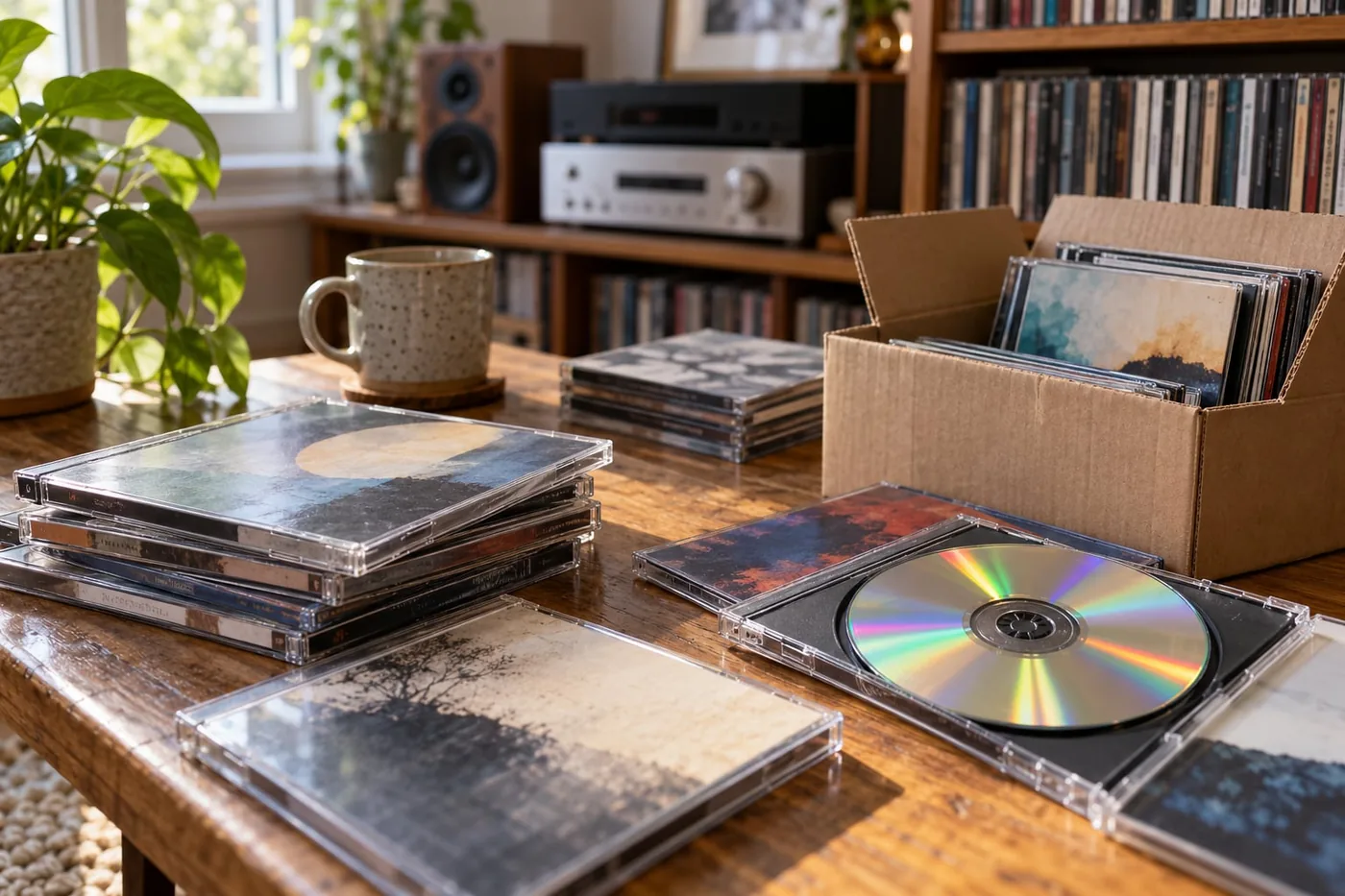
When I recently moved house, I rediscovered something I hadn’t paid much attention to for years: my old CD collection.
Like a lot of people, I’d gradually moved almost all of my music listening over to Spotify. It was convenient, worked everywhere, and meant I no longer had to think about where my music actually lived.
But while looking through my CDs, something occurred to me.
I still listen to most of this music.
In fact, when I looked at the albums and artists I regularly play on Spotify, I realised that I probably already owned around 70% of the music I listen to most often.
That made me question what I was actually paying Spotify for.
Paying to listen to music I already own
My Spotify subscription costs £12.99 per month.
That's:
£155.88 per year.
And, of course, when you stop paying for Spotify, you don't keep anything. You're effectively renting access to the music.
That isn't necessarily a bad thing. Spotify gives you access to an enormous catalogue and is fantastic for discovering new music.
But in my case, I was spending most of my time listening to the same albums and artists I'd been listening to for years — many of which were sitting on a shelf in my house.
So I started wondering:
What if I cancelled Spotify and simply bought the music I didn't already own?
CDs are surprisingly cheap
The next surprise was how inexpensive second-hand CDs have become.
Looking around sites such as eBay and Music Magpie, I found plenty of albums for only a few pounds, with some selling for around £1.
Suddenly the idea started to make a lot more sense.
If I already owned roughly 70% of the music I regularly listen to, I didn't need to recreate the entire Spotify catalogue. I only needed to fill in the gaps.
Instead of spending £155.88 every year on a subscription, I could gradually spend that money building a music collection that I actually own.
Even buying brand-new CDs at around £12–£13 each, the cost of one year's Spotify subscription would buy roughly 11 or 12 albums.
Buy second-hand and that money can go considerably further.
And once I've bought them, they're mine.
But how would I actually listen to them?
Owning CDs is one thing. Going back to carrying a portable CD player around clearly wasn't going to happen.
I still wanted the convenience I'd become used to with streaming.
My main listening situations are:
- iPhone and headphones
- Sonos speakers
- my Denon Hi-Fi
- Apple CarPlay in the car
So I started looking for an app that would let me manage and play my own music collection.
After experimenting with a few options, I eventually came to another conclusion:
Why not build my own?
That became my Off-Grid Music Player, an iPhone app designed specifically for playing music that you actually own.
I wrote about building it here:
Building Off-Grid Music Player with AI coding tools
The slightly ironic thing is that cancelling a music subscription ended up becoming a software project.
Turning my CDs into a digital library
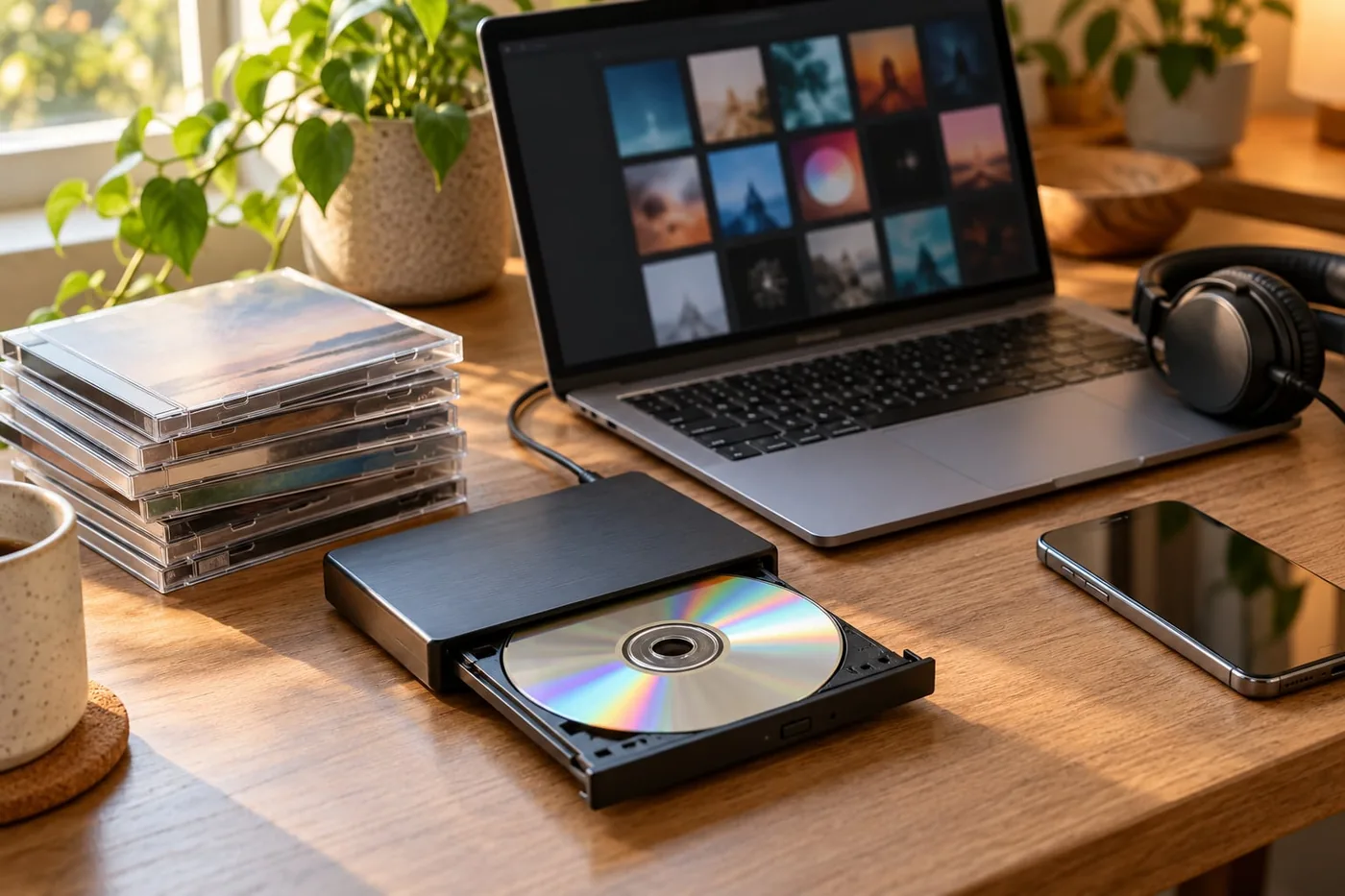
The next step was getting the CD collection onto my computer.
I dusted off an old DVD drive and initially started ripping the CDs using iTunes.
It worked, but I quickly became frustrated with inconsistent metadata, album artwork and general management of the library.
Eventually I bought dBpoweramp, which has been far more reliable.
It also gave me the option of ripping my CDs to FLAC, a lossless format that preserves the full quality of the original CD.
That means I'm not just recreating my Spotify library — I'm creating a high-quality digital archive of my music collection.
Then I remembered all the music I'd already bought digitally
While building the library, I realised there was another source of music I'd almost forgotten about.
Over the years I'd bought quite a lot of MP3 and AAC music from both Amazon and Apple.
Amazon also used to provide digital MP3 copies of some music I'd bought physically on CD or vinyl.
I logged back into my old accounts and, to my surprise, much of that purchased music was still available to download.
So those files have now joined the collection as well.
My digital library is becoming a mixture of:
FLAC, MP3 and AAC files, all stored locally and playable from my iPhone using the app I've built.
Streaming is convenient. Ownership is different.
I'm not suggesting Spotify is bad.
For discovering music, trying new artists and having millions of songs instantly available, streaming services are incredibly useful.
But I've realised that isn't actually how I listen to music most of the time.
I tend to return to the same albums and artists again and again.
And if I'm going to listen to an album hundreds of times over the next decade, I'd rather spend a few pounds buying it than keep paying indefinitely for permission to access it.
There's also something satisfying about rebuilding a proper music collection.
I can choose the version I want.
I can keep it for as long as I want.
Nobody can remove an album because a licensing agreement has changed.
And I don't need an internet connection to listen to it.
I'm buying music again
So, after years of streaming, I've started buying CDs again.
Mostly second-hand, occasionally new, and sometimes as digital downloads.
I'm slowly filling in the gaps in my collection rather than trying to own everything at once.
Cancelling Spotify hasn't really felt like going backwards.
If anything, it has reminded me how enjoyable it is to actually own music.
And this time, I still get all the convenience of a digital music library.
The only difference is that the library is mine.